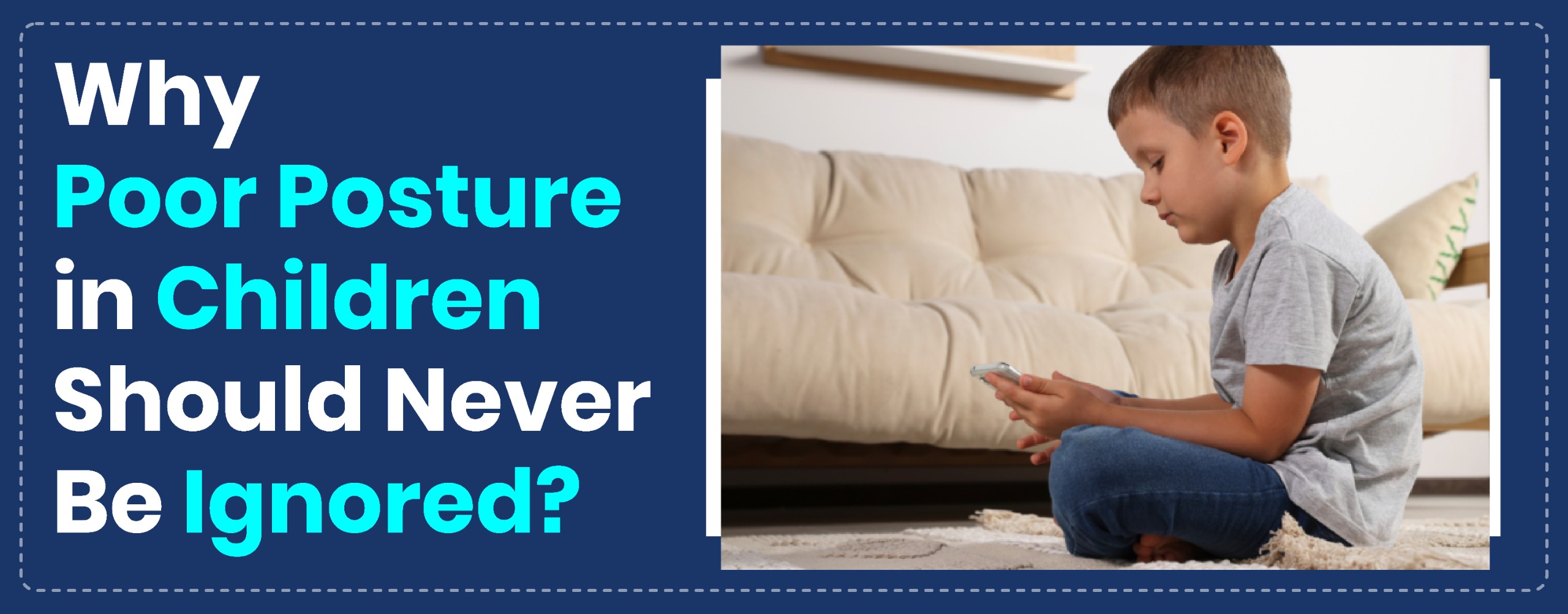
Posture refers to the way in which a child sits, stands, walks or lies down. Posture ensures that the body remains relaxed. Poor posture occurs when the body is not in the proper position for a long period.
Poor posture among children is becoming very common today. Several children spend a lot of time sitting behind the table studying, with phones, tablets and computers. Due to this, their body fails to receive sufficient movement and their muscles are weakened.
Poor posture is a very significant issue that should be corrected early. Correction of posture issues at such a tender age can make children stronger and healthy. Poor posture may cause pain and permanent problems to the child in the long run if not attended to.
What is Poor Posture in Children?
Poor posture implies inappropriate positioning of the child in terms of sitting, standing, or moving. This exerts additional strain on muscles, joints and the spine.
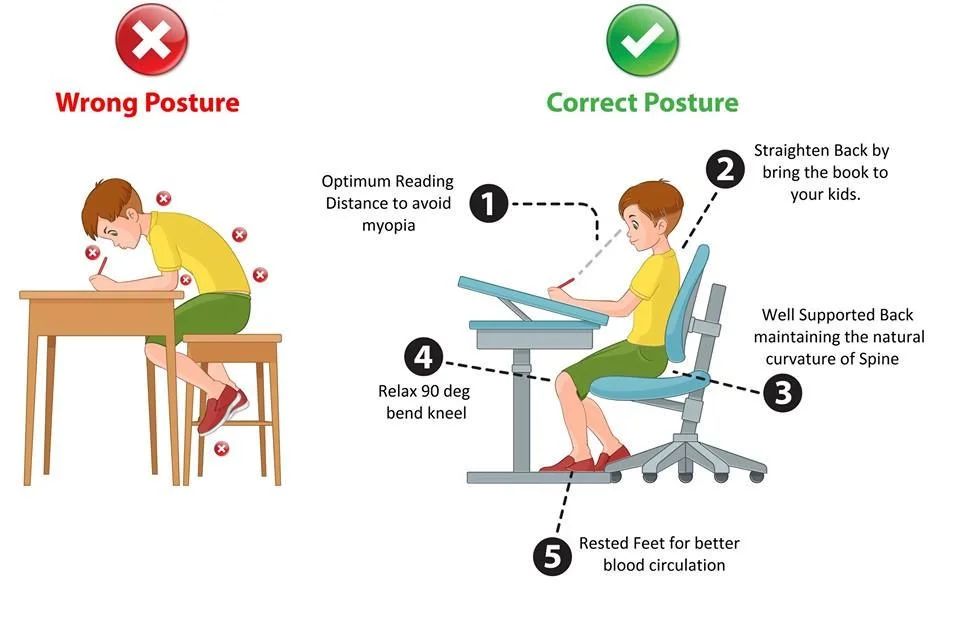
Examples of bad posture include:
- Bending during sitting or standing
- Head protruded during use of phone or reading
- Flattened or pendulous shoulders
- Sitting with a curved back rather than a straight back
There are some posture issues that are temporary behaviors. Indicatively, a child may sit improperly during short periods of studying. These are habits that can be easily corrected. Nevertheless, in cases where bad posture is practiced day in and day out over months or years, it may become a posture issue that requires action.
Primary Reasons of Bad Posture among Children
Bad posture is not an abrupt occurrence. It generally grows gradually through changes in habits and lifestyle in daily routine.
- Spending Too Much Time on the Screen and Sitting Too Long
- School Bags of Heavy Weight or Which Are Not Worn Properly
- Poor Core Muscles and Poor Physical Activity
- Growth Spurts and Developmental Factors
Effects of Poor Posture on a Child’s Health
Bad posture is not only about looks. It may affect the physical and psychological health of a child.
Neck, Shoulder, and Back Pain
Bad posture exerts additional stress on muscles and joints. Over time, this can cause:
- Neck stiffness
- Shoulder pain
- Upper or lower back pain
Even very young children may begin to complain of pain if posture is not taken into consideration.
Muscle Fatigue and Imbalance
When posture is poor:
- Certain muscles are overworked
- Some muscles become weak
This imbalance causes the child to feel fatigued soon, even after basic activities such as sitting and writing.
Less Concentration and Breathing Efficiency
Poor posture may affect breathing because the chest does not expand fully. This may lead to:
- Shallow breathing
- Reduced oxygen supply to the brain
- Loss of concentration and attention
Children may feel restless or fatigued at school.
Spinal Stress Over the Long Run if Left Unchecked
If bad posture is maintained over many years:
- The natural shape of the spine may be lost
- Long-term spinal stress may occur
- Risk of posture-related problems in adulthood increases
These problems can be prevented through early care.
Correction of Poor Posture
Poor posture can be corrected, particularly in children. Their bodies are adaptive to guidance and exercises.
Role of Pediatric Physiotherapy
Pediatric physiotherapy emphasizes posture, movement, and muscular balance among children. A trained physiotherapist:
- Monitors the sitting, standing and walking of the child
- Assesses muscle strength and flexibility
- Identifies early postural issues
This professional guidance assists in safe and effective correction.
MileStone PRC offers Pediatric Physiotherapy Services in Jaipur
Posture Evaluation and Person-Centered Treatment
Each child is different. Effective posture evaluation helps develop a plan that meets the needs of the child. Treatment may include:
- Specific posture training
- Stretching tight muscles
- Strengthening weak muscles
The goal is to improve posture gradually and painlessly.
Posture Correction Exercises for Children
Exercises play an important role in correcting posture. These exercises are:
- Simple and child-friendly
- Designed to engage back, neck and core muscles
- Easy to perform at home
Regular practice helps children maintain proper posture.
Ergonomic Corrections
Proper posture also depends on the child’s environment. Simple changes include:
- Table and chair of correct height
- Feet placed flat on the ground
- School bag worn on both shoulders
These small adjustments reduce pressure on the body.
The Easy Way to Correct Posture at Home with Parents
Parents can contribute a lot in ensuring that children pick good posture habits.
Encourage Physical Activity and Rest
Children are not to sit long without any movement. Parents can:
- Encourage outdoor play
- Grant brief movement interruption in the study period
- Encourage movement e.g. walking, cycling or stretching
Workouts maintain muscles to be strong and active.
Reduce Screen Time
Posture strain is reduced by limiting the screen time. Parents can:
- Have timetables on mobile and television usage
- Reading should be discouraged, instead encourage drawing or playing
- Make sure that the screens are eye level
This assists in decreasing forward head position.
Proper Seating Position Graciously
Children are not conscious of their posture. Parents can:
- Remind them to sit straight in a gentle manner
- Avoid scolding or forcing
- Lead by example by sitting in the right posture
Soft directions are preferable to rigid regulations.
Adhere to Exercises Prescribed by the Therapist
In case exercises are prescribed by a physiotherapist:
- Get them into everyday life
- Do them along with the child
- Make the sessions brief and entertaining
Regularity is of greater significance than intensity.
You might be interested in: Stages of Child Development
Conclusion
Poor posture in children is gaining momentum but it cannot be ignored. Comprehension of the nature of posture, the reasons behind poor posture and the consequences of poor posture will enable parents to act in time.
Pain and complications can be avoided by simple exercises, improved customs and expert advice. Early-guided children also build stronger bodies, have improved concentration and healthy postures that will carry them in life.
Assistance in adjusting the position of the child today results in a healthier future.