
Vision is a very significant part in the way children learn, read, write, play sports and cognitively perceive the world around them. Most parents assume that in case a child can see well, then the vision is ideal. Eyesight and visual skills are different. Eyesight is merely the ability of an individual to observe objects in a distance. The visual skills on the other hand involve the movement of the eyes, the coordination of the eyes, the concentration of the eyes and the interpretation of the information that the eyes relay to the brain.
Occasionally, the child might possess normal eyes, yet still experience problems with reading, writing, or focusing on a specific task as his/her visual system is not functioning efficiently. Vision therapy is a form of structured training that enters into play here to help in enhancing the functioning of the eye–brain interaction. It is non-invasive, safe and specially for children with learning problems due to visual problems.
This guide by MileStone PRC providing pediatric therapy services in Jaipur will teach you about what the vision therapy is, its mechanism, the people who require the therapy, and tools and exercises involved in the treatment process.
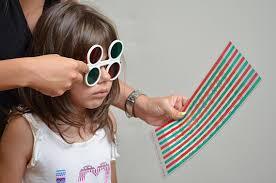
What Is Vision Therapy?
Vision therapy is a complex of exercises and activities, which aid in training the brain and the eyes to work in tandem. It is commonly referred as a physical therapy except that it does not improve the body to move more effectively and the eyes are the ones that are moved and focused in a more efficient manner.
Who Needs Vision Therapy?
It is shocking to learn that a great number of common childhood issues are associated with visual problems. Even when a child is clever, industrious, and willing to learn, he or she can have a problem with schoolwork. It is not the question of motivation but their eye work.
Vision therapy is suggested in children with:
- Eye tracking problems
Children can lose their positions during the reading process or jump lines frequently. - Convergence insufficiency
Eyes are unable to collaborate particularly at short ranges. - Focusing problems
The child can also read briefly only to have words becoming blurred. - Amblyopia (lazy eye)
The eye has one eye which is not as good as the other with glasses. - Strabismus
Eyes may be inverted or everted. - Reading difficulties
Difficulty in reading, inadequate understanding, or word confusion. - Poor visual motor skills
Problems with copying off the board, irregular handwriting, puzzles.
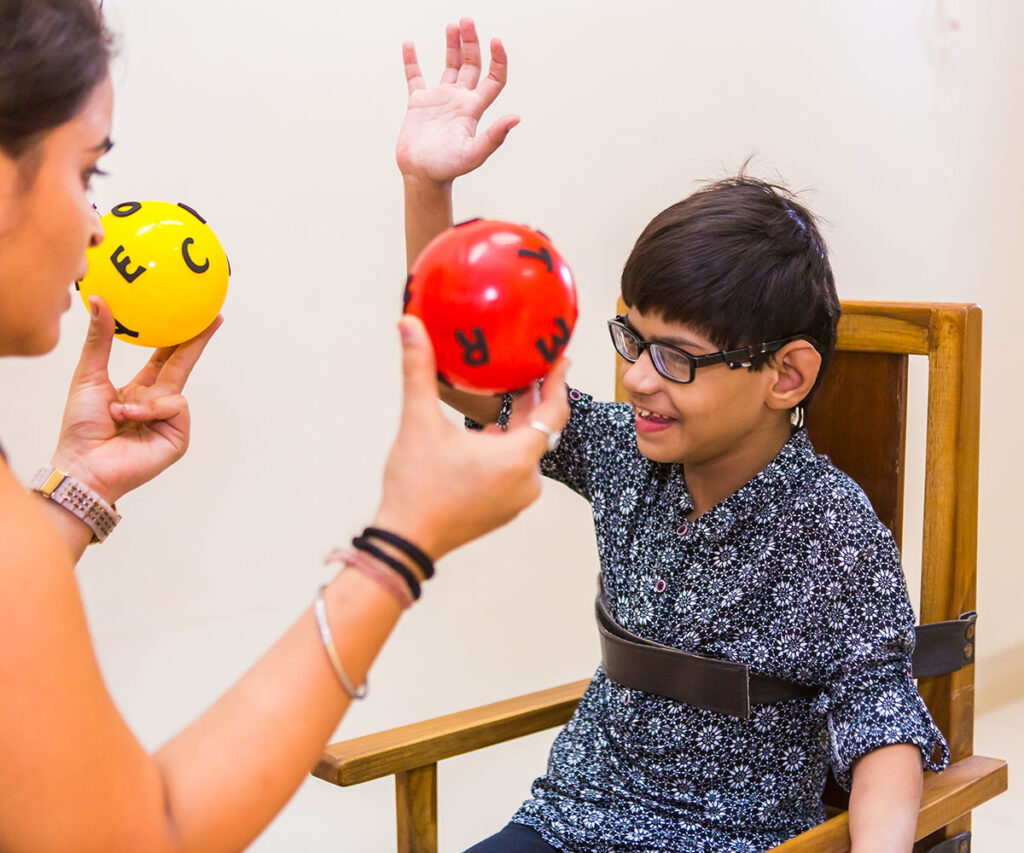
Symptoms that parents tend to observe
Visual skill problems in children reveal:
- Frequent headaches
- Rubbing eyes often
- Trouble paying attention
- Holding books very close
- Avoiding reading
- Poor handwriting
- Slow homework
- Difficulty catching a ball
- Lamenting that words are moving on the page
A vision therapy assessment can come in handy in case a child exhibits two or more of the following problems.
Benefits of Vision Therapy
Children have positive transformation in most aspects of their lives when visual skills are enhanced. Improvement in schoolwork is only one of the areas that parents tend to observe, but also in confidence and behaviour.
These are typical advantages:
- Better reading ability
Children are able to read without being fatigued and they comprehend more. - Improved eye tracking
They do not lose track when reading or miss on lines. - Increased attention
Increased vision lowers mental effort and it becomes easy to concentrate. - Fewer headaches or eye pain
Fewer complaints have to do with the eye stress. - Better sports coordination
Distance becomes an easier task to catch, throw and judge. - Improved handwriting and copying
Writing becomes less untidy and fast. - Increased self-esteem in school
Children are more relaxed in school and they are more involved.
Learning can be very easy and enjoyable when the visual system works in a smooth manner.
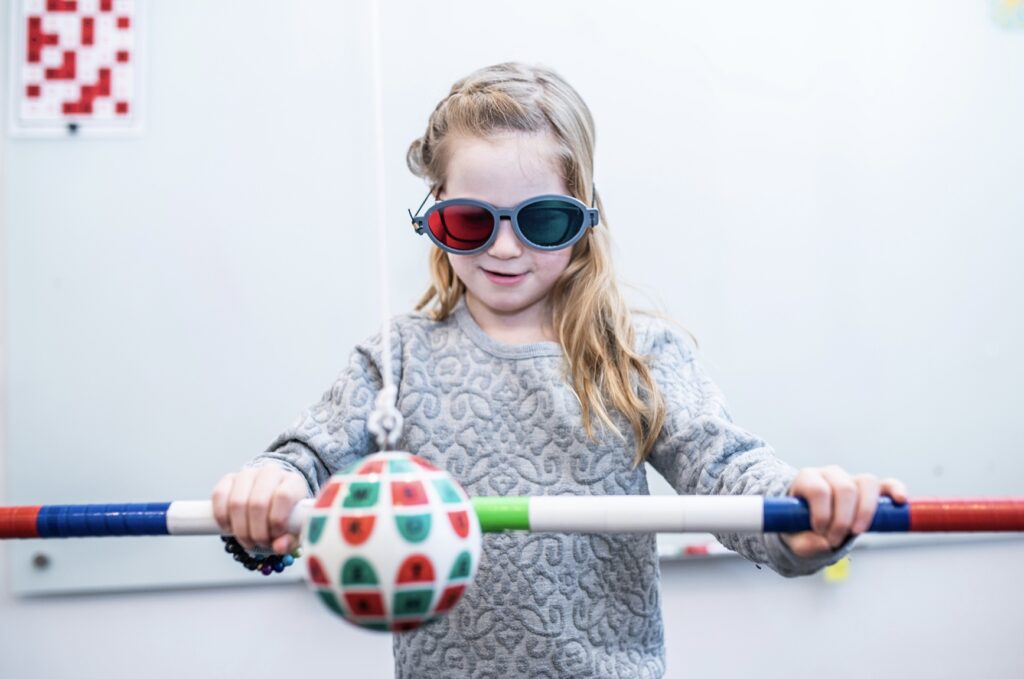
How Vision Therapy Treatment Works
Vision therapy normally takes place in sessions of one week with a range of between 30 to 60 minutes. A therapist or a trained optometrist takes the child through a number of exercises that are challenging and strengthening to the visual system.
The general mechanism of the process
- Weekly in-clinic sessions
Depending on the needs of children, they attend one or two sessions a week. - Eye–brain activities
These are activities that enhance concentration, monitoring, and eye–hand coordination. - Home-based exercises
The therapist provides easy assignments to be practiced in the home. Such activities assist in accelerating development. - Custom treatment plan
The planning is done depending on the visual needs of each child.
The majority of children also enjoy the sessions since most of the activities can be considered games. This renders the therapy involving and simple to adhere to.
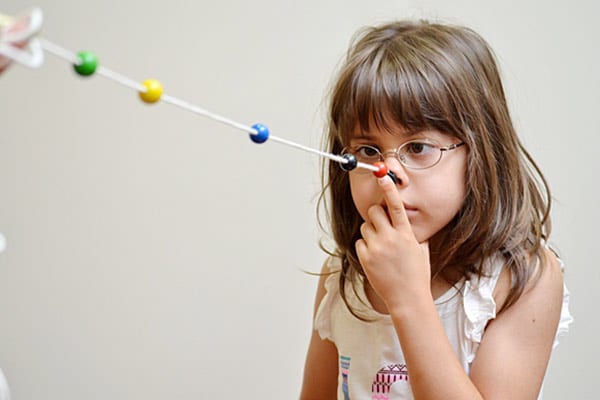
Effective Vision Therapy Exercises
Vision therapy involves numerous exercises which aid the eyes to acquire the skill of moving and concentrating in the right manner. The most common ones are as follows:
- Brock String
A rope that has beads and is used to enhance the eye coordination and depth perception. - Exercises of saccadic eye movement
Eye-train activities which involve training the eyes to react rapidly to read one target and then the next. - Pencil push-ups
Assists the eyes in operating in unison in focusing on the close objects. - Hart Chart exercises
Enhances flexibility of focusing between near and far words. - Eye tracking mazes
Simply made paper mazes, which assist in the training of smooth eye movement. - Eye–hand coordination tasks
Activities such as catching a ball or pairing of shapes to enhance visual motor skills.
These exercises are selected depending on the most difficult aspect of a child.
Common Vision Therapy Tools
Vision therapy involves numerous aids to facilitate and simplify the process of learning the visual skills. All the tools have a certain purpose.
- Brock String
Bi-ocular work aids the depth perception and both eyes work well. - Marsden Ball
To improve coordination and eye tracking a ball on a string is used. - Lens flippers
Two lenses swapped back and forth to enhance the power of focusing. - Prisms
Special lenses, which aid in training eye alignment and sharpening of vision through binos. - Hart Chart
An exercise tracking and focusing chart that consists of scattered letters. - Balance boards / pegboards
Helps enhance interrelationship between vision, balance and movement. - Vision therapy with computers
Online applications which allow exercises to be interactive and give real-time feedback.
These are the tools that assist in making therapy more efficient and entertaining to the kids.
How Long Does Vision Therapy Take?
The duration of treatment is determined by the severity of the visual issues of the child. There are those children who develop fast, and those that require longer development.
General timelines include:
- Mild cases: 3 to 4 months
- Moderate cases: 4 to 6 months
- Complex cases: 6 months or more or 1 year or more
Consistency is the most crucial consideration. Those children who come to the regular sessions and perform their exercises at home demonstrate the most successful outcomes. Missing classes or failure to practice at home can make progress slow.
Final Thoughts
Vision therapy is an effective, safe and non-invasive method of enhancing the visual process that children require in learning, reading, writing and daily activities. When their visual deficiencies are treated in young age, children are confident, become more settled in school and find it easier to do what they did not find easy in the past.
In case a child presents such symptoms as headaches, reading lines asymmetrically, having poor handwriting or not being able to concentrate, it is prudent to consider assessing his or her visual abilities. Thanks to proper treatment program and practice, vision therapy can change a lot in the life of a child.
Read More: Autism Spectrum Disorder,
