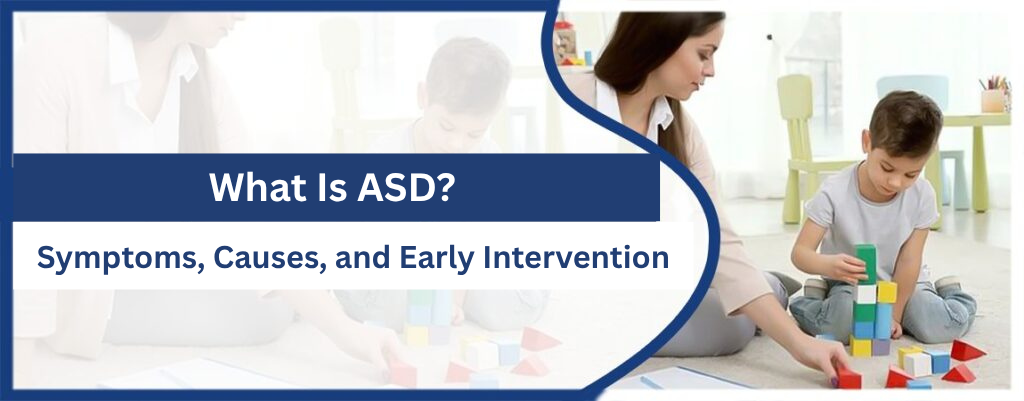
Autism Spectrum Disorder, abbreviated ASD, is a neurodevelopmental disease that can influence the process of a person’s learning, communication, and perception of the surrounding world. There are numerous individuals who seek answers to such questions as “What is autism?” and “What is the meaning of autism and ASD disorder?” because they would like to know more about this disorder. Autism is not a disease. It is just another form of brain development and functionality. This disparity impacts children during their early years, and that is why awareness and early-stage diagnosis are highly significant. Parents and teachers can provide the child with more support when they learn about autism at an early age.
Today, autism is becoming familiar, and more families are becoming aware of autism. The better informed a person is about it, the earlier they can save a child and provide the appropriate care.
1. Understanding the Spectrum: How Autism Differs in Every Individual
The term “spectrum” informs us that not all people have the same autism. Children with autism are all different. There are children with mild autism symptoms, and others may require additional assistance.
What the spectrum means
The autism spectrum disorder may appear very different in every individual. It is the reason why we speak of the spectrum as it is full of shades and gradients.
For example:
- There are those children who talk a lot, and there are those who talk very little or not at all.
- Some can be highly skilled puzzle solvers and drawers or have memory retention.
- Some will have difficulty in noisy environments, high-intensity light, or routine variations.
Different levels of autism
People often talk about:
• Types of autism
• Levels of autism
• High-functioning autism
These words are used to indicate the level of support that a child can require. With some assistance, a child with mild autism may be able to learn fast. A second child might require assistance at home, school, and in everyday activities.
Common traits across ASD
Although each child is unique, there are certain trends that are common, e.g.
• Problem following social rules.
• Preferring routines
• Repeating certain actions
• Having a problem expressing emotions.
• Sensitivity to sound, touch, or light.
Knowledge of these typical patterns of autism behaviour assists the family in early observation of such signs.
2. Recognizing the Symptoms of Autism Spectrum Disorder
Early detection enables the parent to assist the child earlier. When a child is very young, a lot of symptoms are exhibited. Certain parents initially observe the autism symptoms in children at the age of 1–3 years.
Symptoms of autism in young children and toddlers
• Speech delay: The child can begin speech later than his/her peers or use limited words.
• Lack of eye contact: The child does not look at people in the same way that other children look.
• Repetitive activities: These children can repeat activities such as hand flapping, spinning, or matching toys.
• Failure to respond to name: This is despite being called by name repeatedly.
These basic observations usually enable the parents to notice the symptoms of autism at an early stage.
Behavioral patterns
Autistic children also have strange behaviors, which are typical of the disorder:
• They can shun the company of others and stay on their own.
• They can also experience problems with interpreting others.
• They can repeat some words, actions, or sounds.
Such are typical signs of autistic behaviour.
Sensory sensitivities
Autism has children with sensory problems. This means:
• Loud noise may scare them.
• They might not prefer some clothes due to the feel of them.
• Bright lights can be a nuisance to them.
• They can be overly sensitive to touch.
Communication challenges
A child might have autism communication problems, which include:
• Not using gestures
• Using very few words
• Monotonous or peculiar voice
• Problems with discussions
The signs do not imply that something is wrong with a child. They simply learn and speak differently.
3. Major Causes and Risk Factors of Autism
The question that many parents ask themselves is why autism occurs. According to scientists, there is no cause. Autism is a result of a combination of genetic as well as environmental influences.
Genetic factors
Autism is a familial disorder. In cases where the child is autistic, parents or siblings can also exhibit the autistic characteristics as well. That is the reason why we refer to them as genetic causes of autism. The genes influence the brain’s development and communication.
Environmental influences
There are ailments that are associated with pregnancy or birth that can be a predisposing factor to autism. They are referred to as environmental factors of autism. They include:
• Exposure to toxins
• Pregnancy-associated viral infections
• Pregnancy complications
• Very low birth weight
• Parents that bear children later on in life.
These are risk factors of autism, but they do not determine autism. They just enhance the possibilities.
Brain development
It has been found out that the brains of children with autism do not develop in the same manner. The process of nerve cell connectivity may vary. These minor deviations influence knowledge acquisition, communication, and behavior. This has commonly been referred to as brain development and autism.
Myths and misconceptions
Autism has numerous myths:
• Bad parenting does not result in autism.
• It does not occur as a result of vaccines.
• It is NOT a mental illness.
Autism is merely an alternative method of brain functioning.
4. Diagnosis and Importance of Early Intervention
A large number of children can be diagnosed at the age of 18 months up to 3 years. Early discovery assists children to learn at higher rates and also enhances communication.
How autism is diagnosed
Physicians resort to such instruments as behavior observation and developmental screening. Checked by professionals such as pediatricians, child psychologists, and speech therapists:
• How the child communicates
• How they play
• How they respond to others
These are the steps that assist in proper diagnosis of autism.
Therapies and treatments
Autism does not have a cure, although when a child is supported early in life, he or she is able to learn essential skills. Part of the useful therapies involves:
• Speech therapy: Teaches children words and enhances speech and expression. It is a speech therapy prevalent among children.
• Occupational therapy: Assists in the daily activities, the movement, and sensory problems. This is relevant to occupational therapy of autism.
• Behavioral Therapy: Assists children in acquiring social and communicational skills in small steps.
These treatments fall under the early intervention of autism and are significant.
Benefits of early support
Many children demonstrate when therapy is begun early:
• Better communication
• Improved learning
• Reduced frustration
• Better social interaction
Early life creates a good foundation for life.
5. Managing and Supporting Children with Autism
Autistic children develop optimally when teachers, therapists, and the family collaborate.
Involvement of family members and caregivers
The parents are the most influential in the management of autism. They can:
• Home therapy
• Create routines
• Use simple language.
• Foster the interests of the child.
Schools and inclusive education
All children deserve an opportunity to learn. Inclusive education assists children to learn with peers in a favorable environment. Teachers may use:
• Visual schedules
• Simple instructions
• Extra time for learning
Emotional and social support
Autistic children require love, patience, and understanding. They can be assisted by parents and teachers:
• Teaching social skills
• Giving positive feedback
• Assistance in making friends with the child
• Reducing sensory overload
Autism care programs usually include programs and therapies that emphasize skills in life.
6. Conclusion: Awareness, Acceptance, and Hope
Autism is a lifelong disorder, but with early intervention and proper support, children with ASD can learn, develop, and lead happy and meaningful lives. Awareness enables the families to have a clear understanding of the symptoms and causes of autism. Acceptance makes the children feel that they are loved and supported. Parents who request assistance at an early stage provide the most effective start for their child.
Families must never feel lonely. Numerous therapy centers and specialists on autism are on hand. With patience, understanding, and the right advice, autistic children would be able to achieve their potential.
Related Blog: Occupational therapy for autism