
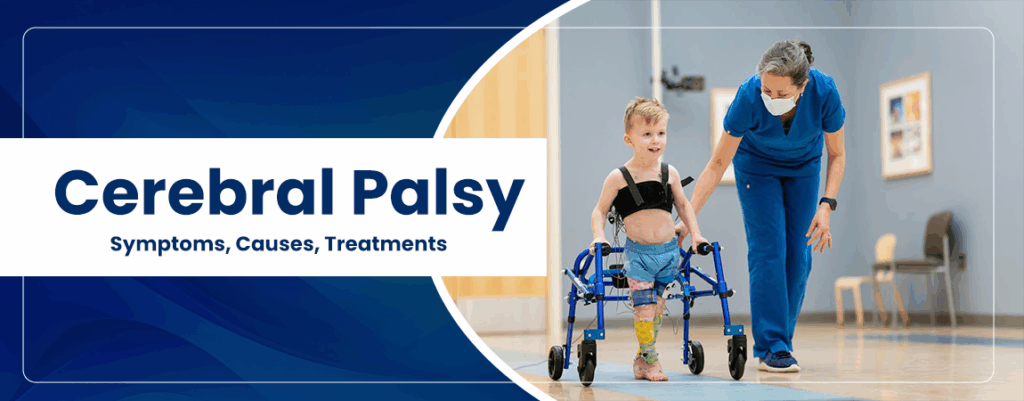
Cerebral Palsy (CP) is an enduring disability disorder disabling the person in the capacity to sustain movement, balance, and postural control. CP is an extremely common motor disorder to be diagnosed in children. Though it affects physical functioning largely, severity and prognosis may be highly unpredictable in individuals.
However, it can be treated by best Pediatric physiotherapist. But, before that, we must know all about Cerebral Palsy, its cause, signs and symptoms, diagnostic process, and treatment.
Here at Milestone PRC, the best Pediatric physiotherapy clinic in Jaipur provides this all details.
What is Cerebral Palsy?
The word “cerebral” to the brain, and “palsy” to paralysis or weakness of the body. Cerebral Palsy is a neurological disorder of disorders that develops in infancy or early childhood. It paralyses body movement and muscle coordination for life. It can make a person unable to even perform the simplest of things like walking, sitting, talking, or even holding something.
Despite this, symptom and severity levels will vary among people in the absence of a case of condition. CP results from defective brain development or damage to the developing brain, usually before, during, or at birth.
Cerebral Palsy is found in about 2 to 3 per 1,000 live births all over the world. Since the disease is not progressive (i.e., cannot be aggravated), it can never be cured and needs to be treated and rehabilitated again and again.
Causes of Cerebral Palsy
Brain impairment or damage along with normal brain growth results in Cerebral Palsy. Cause may not always be traceable but some risk factors have been established:
Prenatal Causes (Prebirth)
- Insufficient provision of sufficient supply of oxygen to the brain through insufficient provision of sufficient blood
- Infection in pregnancy such as rubella, cytomegalovirus, toxoplasmosis
- Mutation in brain development
- Toxication through toxic or harmful substance
- Two or more than two babies (twins, triplets) raise its risk
- Mother’s pregnancy nausea, i.e., thyroid or seizure disorder
Perinatal Causes (Childbirth)
- Possible childbirth or labor complication of lack of oxygen
- Premature birth before 37 weeks’ gestation
- Birth weight is less than 2.5 kg
- Birth head trauma
Postnatal Causes (After Birth)
- Brain infection such as meningitis or encephalitis
- Head trauma due to accident or abuse
- Jaundice if left untreated, leads to brain damage condition known as kernicterus
Improvement in antenatal and perinatal care and intervention in early life reduced the incidence of CP but still CP exists, especially in developing nations.
Types of Cerebral Palsy
Cerebral Palsy is classified by type of movement disorder and body area affected. Classification of CP enables doctors and physical therapists to create the best treatment plan.
1. Spastic Cerebral Palsy
Most common type, affecting 70–80% of all CPs. These are typical of:
- Spasticity (increased tension in muscles)
- Stiff, rigid muscles
- Rigidity of posture and movement
Subtypes are
- Spastic hemiplegia: One limb of the body
- Spastic diplegia: Legs, not arms
- Spastic quadriplegia: All four arms and even face muscles and trunk
2. Dyskinetic (Athetoid) Cerebral Palsy
This type produces involuntary, uncontrolled movement. Children might develop:
- Wringing or twisting quality of movement
- Difficulty coordinating hand, arm, foot, or leg
- Difficulty with walking and sitting
- Facial muscle involvement that may impede speaking and eating
3. Ataxic Cerebral Palsy
Most, unsteadily balanced, and clumsy. Characteristics include:
- Gimpy walk (gait)
- Inability to move fine (e.g., shirts or buttons to write with)
- Bauble and tremor hands
4. Mixed Cerebral Palsy
There are children who will exhibit the features of two or more types of CP. Spastic and dyskinetic is most common.
Signs and Symptoms of Cerebral Palsy
Symptoms of CP will usually be obvious in early infancy or early childhood. Symptoms will differ depending upon type and degree of disorder and can be extremely variable.
Motor Symptoms
- Muscle floppiness or stiffness
- Abnormal posture
- Delays in reaching milestones (sitting, crawling, walking)
- Poor balance and coordination
- Exaggerated or involuntary movement
- Toeing gait, scissor gait
Speech and Difficulty with Eating:
- Difficulty in speaking well
- Difficulty chewing or swallowing food (dysphagia)
- Drooling due to a lack of muscle control
Sensory and Mental Signs
- Impairment in hearing or visuospatial
- Epilepsy or seizure
- Some intellectual disability
- Behavior disorder
Infancy milestones must be tested. Abnormal or delayed motor function must be tested with the physician.
Diagnosis of Cerebral Palsy
Most of them will acquire Cerebral Palsy within their first two years of life, but in mild cerebral palsy, it is diagnosed very late after childhood. Phases involved in Diagnosis are as follows –
- Developmental screening: Doctor tests posture, tone, reflex, and movement.
- Neuroimaging tests
- Magnetic Resonance Imaging (MRI): Probable test which would be ordered to eliminate risk of abnormality of the brain.
- Computerized Tomography (CT scan): Would arouse suspicion of brain trauma.
- EEG: Cause as offender as seizure.
- Genetic and Metabolic Tests: To exclude other disease conditions.
- Hearing and Vision Testing: To diagnose co-morbid sensory impairment.
Treatment Modalities of Cerebral Palsy
CP cannot be treated but its impact can be controlled and child’s functioning can be maximized by treatment. Physicians, physiotherapists, and care givers restore the child.
1. Physical Therapy (PT)
The Physical Therapy is most essential control of Cerebral Palsy. Physical Therapy improves:
- Muscle strength
- Flexibility
- Posture
- Mobility
Important Elements:
- Stretching exercises: Prevents the muscle from forming contractures and a joint deformity.
- Strength training: Weaker muscles are made stronger by increased endurance.
- Motor development: Facilitates the achievement of gross motor skills like sitting, crawling, standing, and walking.
- Use of equipment: The therapists can utilize stability balls, balance boards, parallel bars, or resistance bands when attempting intervention.
Physical therapy during the child-rearing years employs brain plasticity to facilitate more functional results later in life for the child.
2. Occupational Therapy (OT)
Occupational Therapy is utilized to involve the child with the goal of affecting him to become more manageable daily activities such as:
- Dressing
- Bathing
- Handwriting
- Cutting food
Benefits:
- Improves hand-eye coordination
- Improves independence of daily activities
- Transfers adaptive skills using adaptive devices:
- Adaptive toothbrushes
- Writing grips
- Feeding spoons
- Improves sensory integration and behavior management, particularly in children with co-morbid sensory processing disorder
OT improves active participation of children at home and school.
3. Speech and Language Therapy (SLT)
The majority of children with Cerebral Palsy have in-effective speech, communication, or swallowing as a result of in-effective control of facial and throat muscles.
Goals of SLT:
- Voice modulation and speech articulation
- Oral-motor facilitation for the functioning of feeding and swallowing
- Development of alternate means of communication (e.g., signing, picture boards, AAC devices) if the child cannot talk
- Phonetics language acquisition by activity, story, and play
Speech therapy augments control over drooling and salivation that has an impact on social self-perception.
4. Medications
No medication for curing Cerebral Palsy but renders its condition like spasticity in muscles, pain, and convulsions tolerable.
Repeat Medications
- Oral Muscle Relaxants: Diazepam, Baclofen, Tizanidine, or Dantrolene relaxes and prevents spasm in the muscles.
- Botulinum Toxin (Botox) Injections: Destroys spasm muscles for a temporary period and decreases spasticity in the arm or leg.
- Intra-Thecal Baclofen Therapy (ITB): Administers Baclofen intrathecally with the assistance of a surgically implanted pump, beneficial in severe spasticity.
- Anti-Seizure Medication: In concomitant epilepsy or CP seizures.
- Long-term medication with painkillers like ibuprofen or paracetamol.
Regularly monitoring all the drugs for their side effects.
5. Surgery
Bone curvature, contracture, or dislocation of the hip occurs in some children suffering from Cerebral Palsy as a consequence of muscle imbalance and spasticity in the long term.
Surgical Solutions are:
- Tenotomy or tendon lengthening: To make it possible for increased mobility and contracture relief.
- Hip dislocation: Most often in highly involved CP children.
- Spinal surgery: If scoliosis or curvature of spine is present.
- Alinement of bones: For easy positioning of arms and legs and walking.
Pre- and post-operative physiotherapy enhances Orthopedic management for a successful outcome.
6. Assistive Devices and Technology
Some assistive devices enable children with Cerebral Palsy to walk, live independently, and communicate.
Examples are
- Mobility devices: Cane, walker, gait trainer, wheelchair
- Orthotics and bracing (AFOs): For the provision of support for foot position and muscle support to leg
- AAC: Speech-generating program in tablet computer or picture board or electronic speech-generating device
- Adaptive devices: Velcro dresses or elastic dresses, feeding aids, assistive writing devices, and adaptive scissors
All these devices enable a child to be independent in the performance of activities of daily living.
Conclusion
Cerebral Palsy is a lifelong illness and isn’t easy-going for itself, but only that amount of independence and accomplishment is available – if and when someone gets diagnosed at decent enough time and had their life in order with flair. CP kids can get on with life as just anybodys with the help of physical therapy, therapy classes, and around-the-clock intervention on the family’s part.
knowledge of the condition, prompt treatment instead of delay, and adherence to a full course of therapy can literally be a matter of success or failure in a Cerebral Palsy child.
FAQs
Is Cerebral Palsy a disease?
No, CP is not disease or state of being diseased. It is an irremediable, non-progressive neurologic impairment, i.e., brain damage can deteriorate with time but symptoms change with age.
Is Cerebral Palsy curable?
Now Cerebral Palsy is not treatable. However, with appropriate medical intervention, early treatment, and physiotherapy, the patient can have phenomenal functional recovery and quality of life.
What are the earliest warning signs of a child with Cerebral Palsy?
Some of the earliest signs are:
- Delayed milestones (not sitting, crawling, or walking like normal children)
- Muscles look sloppy or stiff
- cannot hold the head in a steady position
- unwanted movement
- leaning towards the use of one side of the body
Parents will visit a physician to find out whether these are present.
Is Cerebral Palsy inherited?
The majority of cases of Cerebral Palsy are not typically inherited. Very rarely genetic brain development flaws in others create these.
Can a child with Cerebral Palsy have a normal life?
Yes, CP children may become productive and successful if they are treated gently, cared for, and loved. Independence is gained through early treatment.
Can Cerebral Palsy affect sleeping?
Yes, sleeping disorders are a usual issue with the majority of Cerebral Palsy children because they experience spasms, pain, or discomfort. Sleeping disorders contribute to the child’s physical well-being and behavior and should thus be accordingly treated as per the pediatric specialist’s advice.
Is seizure common in CP children?
Yes, seizures or epilepsy are not unfamiliar to CP children, especially the ones with more brain damage. Seizures are controlled on medication and a check-up with a neurologist if the child does have one, in fact.
What is assistive technology that can assist CP children?
Assistive technology may be:
- Walkers and walking aids
- Braces or orthotics worn to stabilize a joint
- Disability communication aids
- Usable writing and eating aids
They enhance quality of life and autonomy.
Cerebral Palsy physically disabled children: sport- or activity-capable?
Yes! Physically disabled children can participate in most adaptive recreational activity and sport. Swimming, horse riding (or hippotherapy), and cycling with adaptation are strength-building, self-esteem-building, and to integration rewarding.
How long does the life span of a Cerebral Palsy person last?
Life expectancy will hinge on how severe the illness and consequent disease complications. People with mild and moderate CP can have a healthy, long life. Proper medical care, therapy, and adaptive devices allow a person to lead a long life.
Is Cerebral Palsy a mental disease?
No, Cerebral Palsy is not a brain disease but a neuromuscular disease. It affects only the coordination and movement of muscles. Certain secondary emotional or psychological issues some people have are unrelated to the disease.
Will Cerebral Palsy become worse with age?
Brain injury that causes CP will deteriorate no matter what, but facial appearances will be different as it becomes worse and worse. Spasticity, fractured posturing, or joint deformity will keep on worsening and worsening unless treated. Treatment halts and resumes the above.
Is diet and nutrition something which is part which may have an effect on a child with Cerebral Palsy?
Yes. CP kids will have problems chewing, swallowing, or digested food. With lots of good healthy well-nourished food will be able to offer them nutrients they will need in order to develop, bone to form, and stay healthy. There will need to be spoon-fed, yet others might be supplemented by meal.
